Plants for Bookshelves That Make Any Reading Space Feel More Alive
A bookshelf can hold far more than novels. With a little greenery tucked between favorite books, an ordinary shelf can become a warm, inviting corner that feels calm, personal, and full of character. The right plants for bookshelves can soften hard lines, add natural color, and make a reading nook feel surprisingly cozy without taking up much room.
Not every houseplant works well on a shelf, though. Some grow too quickly, some need strong sunlight, and others can become messy around books. The secret lies in choosing compact plants with manageable growth, attractive foliage, and care requirements that fit the room.
From trailing vines that spill gracefully over an edge to tiny succulents that sit neatly beside a stack of novels, there are plenty of possibilities. Here are 12 beautiful choices that can turn a simple bookshelf into one of the most charming features in the room.
Pothos
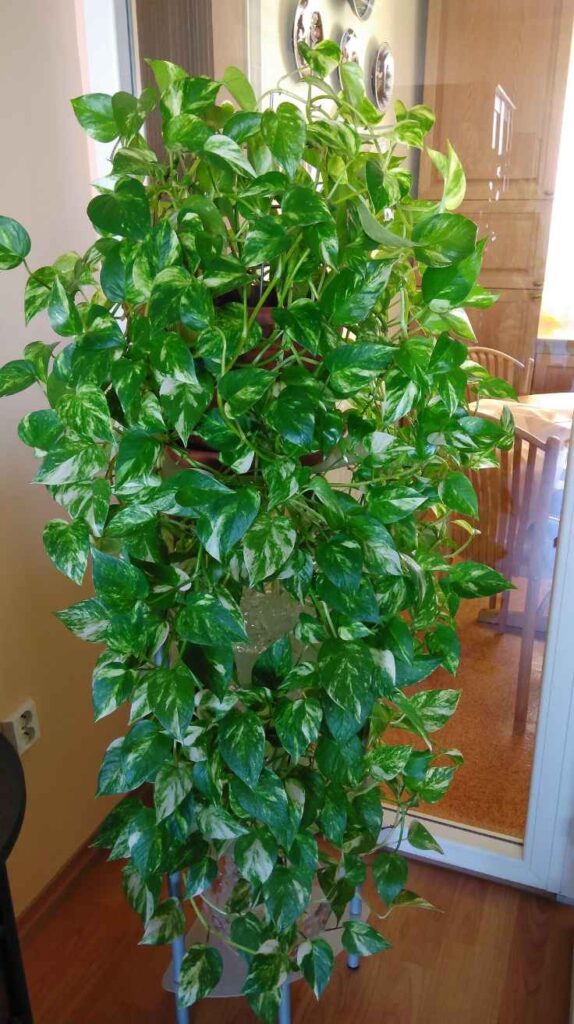
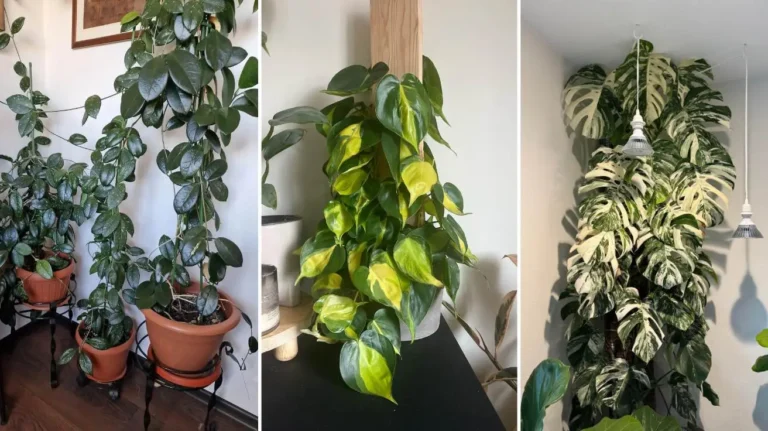
Pothos is one of the easiest choices for adding greenery to a bookshelf, especially for anyone who wants an attractive houseplant without a complicated care routine. Its heart-shaped leaves look beautiful beside books, framed photographs, candles, and small decorative objects. The long stems naturally trail downward, creating a soft cascade that breaks up the straight horizontal lines of shelving.
Golden pothos, marble queen pothos, and jade pothos each bring a slightly different appearance. Golden varieties offer cheerful green and yellow leaves, while marble queen types have creamy patterns that stand out against darker furniture. Pothos can handle a range of indoor lighting conditions, although brighter indirect light usually helps variegated varieties maintain their attractive markings.
A small pot placed near the edge of a shelf can eventually create a dramatic waterfall of foliage. That trailing habit makes this plant particularly useful when a bookshelf feels too rigid or symmetrical. Keep the pot somewhere it will not drip onto books, and allow the soil to dry somewhat between waterings. With minimal attention, this dependable vine can become a long-lasting part of the room’s decor.
String of Pearls
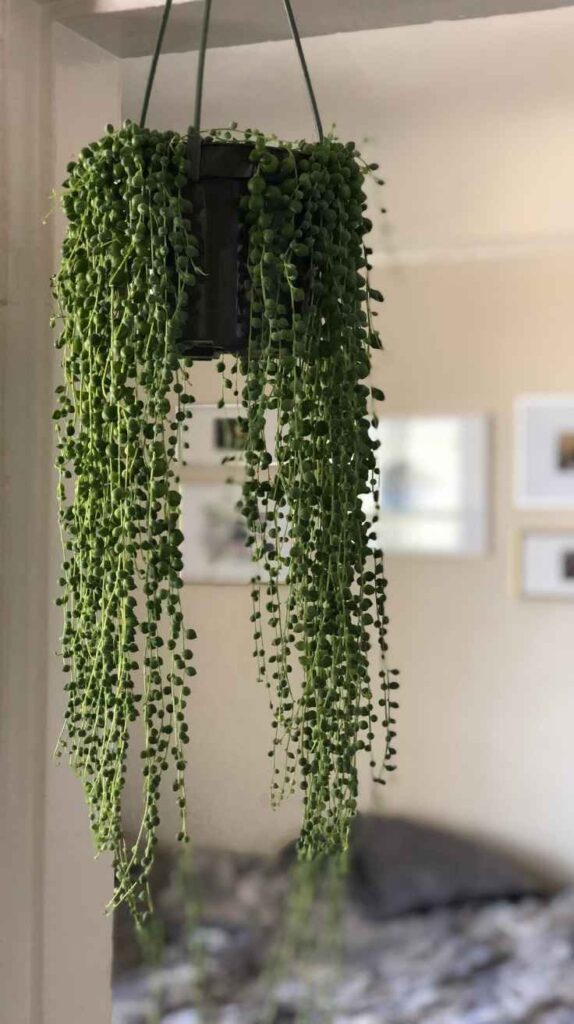
String of pearls brings a completely different texture to a reading space. Instead of broad leaves, this unusual succulent produces slender stems covered with small, rounded green beads. Once placed on a shelf, those stems can gently tumble over the edge, creating a delicate curtain of greenery.
This plant works especially well with minimalist, modern, bohemian, and natural decorating styles. Its sculptural appearance provides visual interest without making a bookshelf look crowded. A simple ceramic planter can make the unusual foliage feel like a small piece of living art.
Good lighting matters. String of pearls generally prefers plenty of bright indirect light, and a location near a sunny window can help it remain healthy. However, extremely harsh direct sunlight through glass can sometimes cause problems, so a little protection may be useful.
Watering requires restraint because this succulent stores moisture in its rounded leaves. Letting the potting mix dry between waterings is generally better than keeping it constantly wet. For a bookshelf that receives enough natural light, this petite plant can add personality and a graceful trailing effect while requiring relatively little space.
Spider Plant

Spider plants are wonderfully adaptable and have a cheerful appearance that can brighten a room. Their long, narrow leaves arch outward from the center, while mature plants can produce small plantlets that hang from slender stems. That growth pattern gives them an appealing layered look when displayed on an upper or middle shelf.
Variegated spider plants are especially attractive because their green-and-white foliage provides contrast against wooden shelves and colorful book covers. They also pair naturally with neutral containers, woven baskets, and other cozy accessories.
A bookshelf near a bright window can provide a comfortable location, although the plant can also tolerate moderate indoor light. The soil should receive regular watering, but it should not remain waterlogged. Containers with drainage holes make care much easier.
Spider plants are also useful when a decorating scheme needs something soft and lively rather than a plant with a rigid upright shape. Their arching leaves can frame books beautifully without overwhelming them. Place one in a simple pot beside a stack of books, and the shelf can immediately feel less formal and more welcoming.
Small Snake Plant

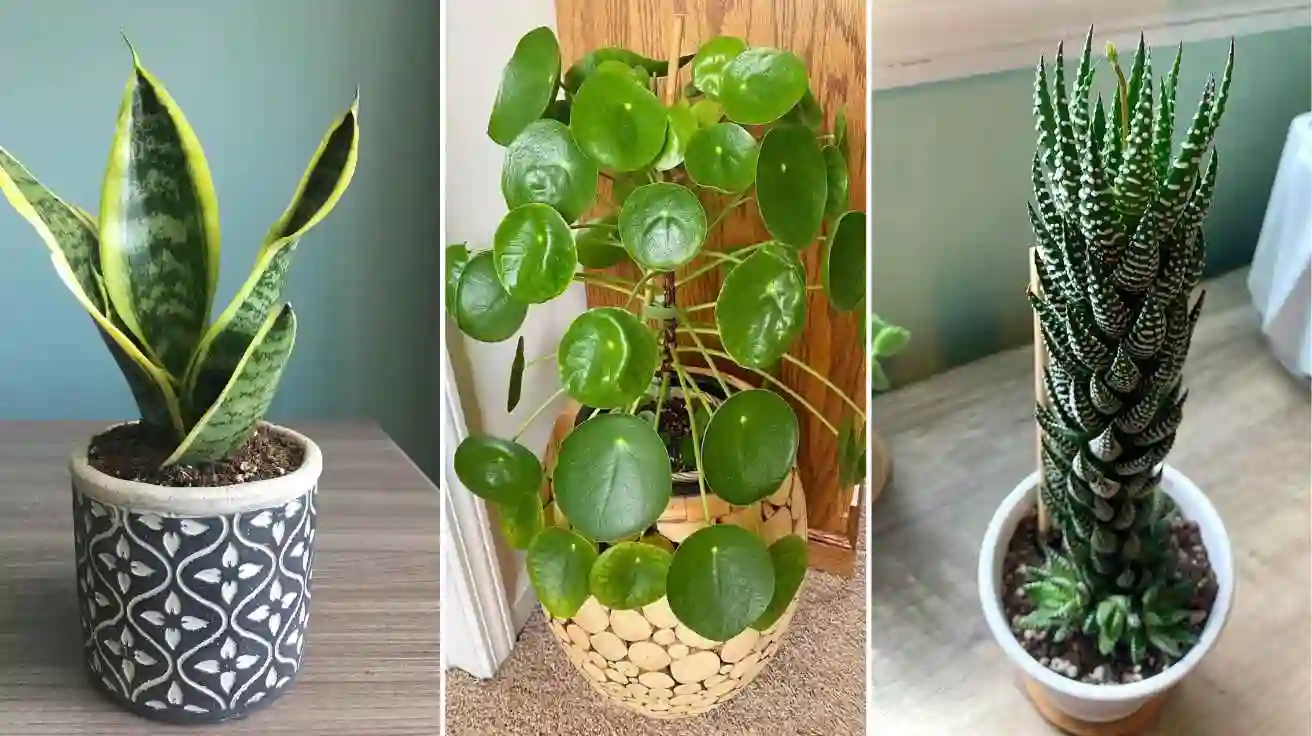
Snake plants are famous for their upright leaves, durability, and ability to tolerate less-than-perfect indoor conditions. A compact variety can work surprisingly well on a bookshelf because it grows vertically rather than spreading widely across the surface.
The stiff, sword-shaped leaves create a strong contrast with horizontal rows of books. That contrast can make a display feel thoughtfully arranged rather than accidentally cluttered. Varieties with yellow-edged leaves can add a subtle decorative accent, while darker green varieties create a calmer appearance.
One of the biggest advantages is that snake plants generally do not demand frequent watering. Their thick leaves store moisture, so allowing the potting mix to dry between waterings is important. Overwatering is a much bigger concern than forgetting to water occasionally.
Choose a small container that matches the scale of the shelf. A huge plant can make the display feel cramped, while a compact specimen can look perfectly balanced. For busy households, dorm rooms, offices, or reading corners, this resilient houseplant offers greenery without demanding constant attention.
Peperomia
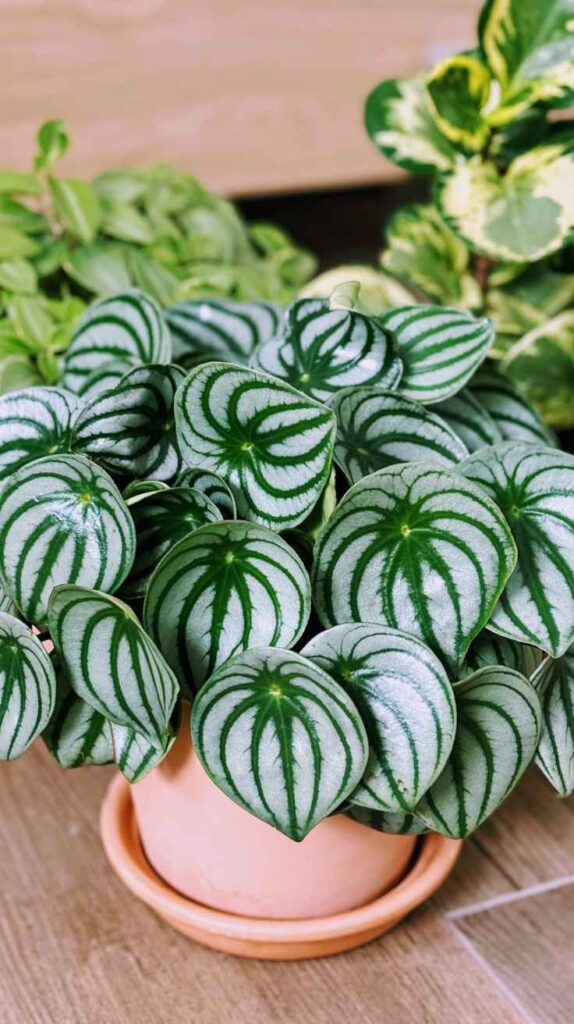
Peperomia offers an enormous amount of variety in a relatively small package. Different types feature rounded leaves, rippled textures, striped patterns, or rich green coloring, making them excellent decorative plants for compact indoor spaces.
Because many peperomia varieties stay relatively small, they can fit comfortably between books without taking over the entire shelf. Their leaves also tend to have a substantial, almost succulent-like appearance, which gives them a polished and healthy look.
Peperomia generally prefers bright, indirect light, although many varieties can adapt to moderate indoor conditions. Watering should remain moderate because the fleshy leaves can hold some moisture. Allowing the soil to dry slightly before watering again can help avoid common problems associated with excessive moisture.
These plants work particularly well in colorful ceramic pots. A terracotta container can create a warm, earthy look, while a white or neutral planter can produce a cleaner modern appearance. Since peperomia comes in so many forms, it is easy to find one that complements the colors already present on a bookshelf.
English Ivy

English ivy creates an instantly romantic appearance with its trailing stems and distinctive lobed leaves. When grown indoors under suitable conditions, it can gently drape from a shelf and create a lush green frame around books and decorative objects.
This makes it particularly appealing for cottage-inspired interiors, traditional reading rooms, vintage spaces, and cozy home libraries. The plant’s flowing growth can soften a shelf filled with rectangular books, giving the arrangement a more relaxed and organic character.
English ivy generally appreciates bright, indirect light and consistent moisture, although the soil should not stay saturated. Good air circulation can also be helpful indoors. Because the vines can grow considerably, regular trimming keeps the plant at a manageable size.
That pruning can actually become part of the fun. A few minutes with clean scissors can shape the plant and prevent it from covering book titles or neighboring decorations. For those who enjoy a slightly old-fashioned botanical feel, a trailing ivy plant can give a bookshelf an almost storybook quality.
Haworthia

Haworthia is a fantastic choice when the shelf has limited space or receives bright light. These small succulents form compact rosettes, often featuring pointed leaves decorated with stripes, ridges, or translucent patterns.
Their architectural appearance contrasts beautifully with soft book covers and natural materials such as wood, linen, and woven baskets. A tiny haworthia in a ceramic or terracotta pot can occupy only a small section of a shelf while still attracting attention.
Care is relatively straightforward. Bright indirect light is usually helpful, and watering should be limited compared with many tropical houseplants. The potting mix should dry between waterings, and drainage is essential.
Haworthia also works beautifully in groups. Several small specimens with different shapes can create a miniature indoor succulent display without consuming much shelf space. Even a single plant can provide a refreshing green accent between larger decorative pieces.
For a bookshelf that needs just a tiny touch of nature rather than a large statement plant, haworthia offers an elegant solution.
Chinese Money Plant

The Chinese money plant is instantly recognizable because of its round, coin-shaped leaves. Its simple form gives it a fresh, contemporary appearance that fits beautifully into modern homes, home offices, bedrooms, and reading areas.
The stems rise from a compact central plant, creating a playful silhouette. When positioned beside books, the circular leaves provide an interesting contrast to rectangular covers and square shelves.
Bright, indirect light can encourage healthy growth, while rotating the container from time to time can help the plant develop evenly. Water when the upper portion of the soil becomes dry, while avoiding excessive moisture. A Chinese money plant can look particularly attractive in a small rounded planter. The repetition of circular shapes between the pot and foliage creates a cohesive visual effect.
Its friendly appearance also makes it suitable for family rooms and children’s reading spaces. Rather than feeling formal or overly decorative, it adds a relaxed botanical touch that makes the surrounding area feel warmer.
Miniature Jade Plant

A miniature jade plant brings a sturdy, sculptural quality to a bookshelf. Its thick stems and fleshy leaves create the appearance of a tiny tree, making it especially charming in a small container.
Because jade plants are succulents, they store water in their leaves and stems. They generally prefer bright light and need less frequent watering than many leafy tropical plants. A sunny shelf or a location close to a bright window can work well.
The compact form of a young jade plant makes it easy to incorporate into a decorative arrangement. Place it beside a few vertically stacked books, a small framed photograph, or a decorative object for a balanced display.
As the plant matures, its woody structure can become even more interesting. Occasional pruning can help maintain a compact shape and encourage branching.
For readers who appreciate natural textures, a miniature jade plant brings a pleasing combination of green foliage, woody stems, and earthy character. It feels less like an accessory and more like a tiny living sculpture.
Air Plant
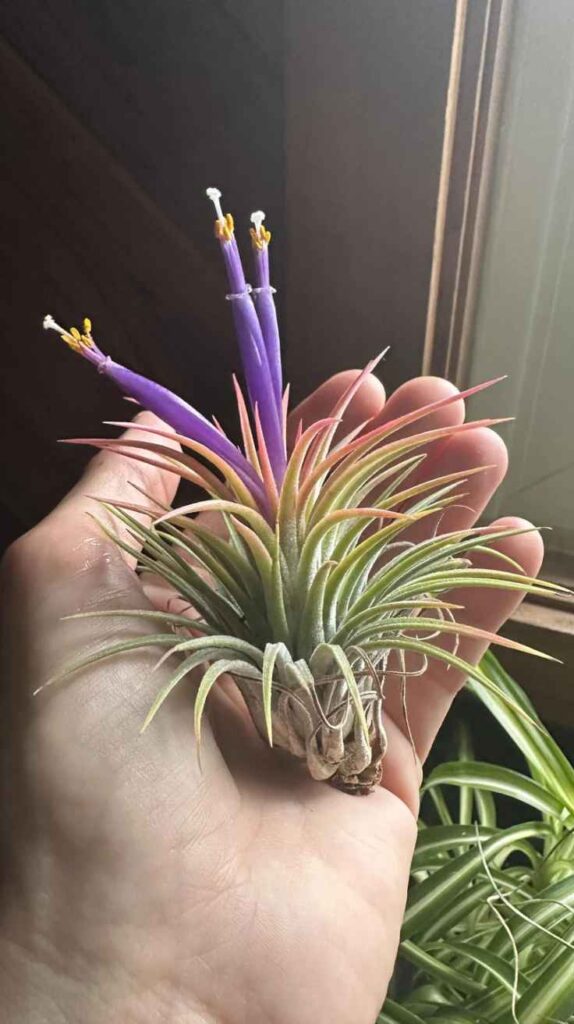
Air plants are among the most flexible decorative choices because they do not require traditional soil. Their unusual appearance makes them ideal for creative bookshelf arrangements where a conventional potted plant might feel too bulky.
They can be displayed in small glass holders, decorative bowls, hanging vessels, or specialized plant stands. Their thin, pointed leaves add a distinctive texture that works especially well alongside books and small collectibles.
Air plants need bright, indirect light and regular moisture. Although they do not grow in soil, they still need proper watering and good airflow. After watering, they should dry properly rather than remaining wet for long periods.
One of their biggest decorative advantages is their size. A tiny air plant can fill an empty visual space without taking up much room. It can sit beside a favorite novel, rest near a framed print, or become the centerpiece of a miniature botanical arrangement.
For a bookshelf with an artistic or minimalist style, air plants can add an unexpected detail that makes visitors stop and take a closer look.
Boston Fern

Boston fern creates a lush, soft appearance that can make a bookshelf feel almost garden-like. Its long fronds arch outward and downward, bringing movement and texture to otherwise straight shelving.
This plant is especially attractive in cozy reading corners where the goal is to create a calm, refreshing atmosphere. Its feathery foliage can soften dark wooden furniture and pair beautifully with woven baskets, warm lighting, and natural fabrics.
Boston ferns generally prefer bright, indirect light and higher humidity than many common houseplants. The soil usually performs best when kept consistently moist but not waterlogged. A dry indoor environment may cause the fronds to become brown or crispy.
Because of its spreading growth, a fern works best when the shelf has enough room around it. Placing it at the end of a shelf allows the fronds to extend outward without covering too many books.
The result can be wonderfully dramatic. Instead of simply decorating a bookshelf, the fern gives the entire area a sense of softness and natural abundance.
Baby Rubber Plant
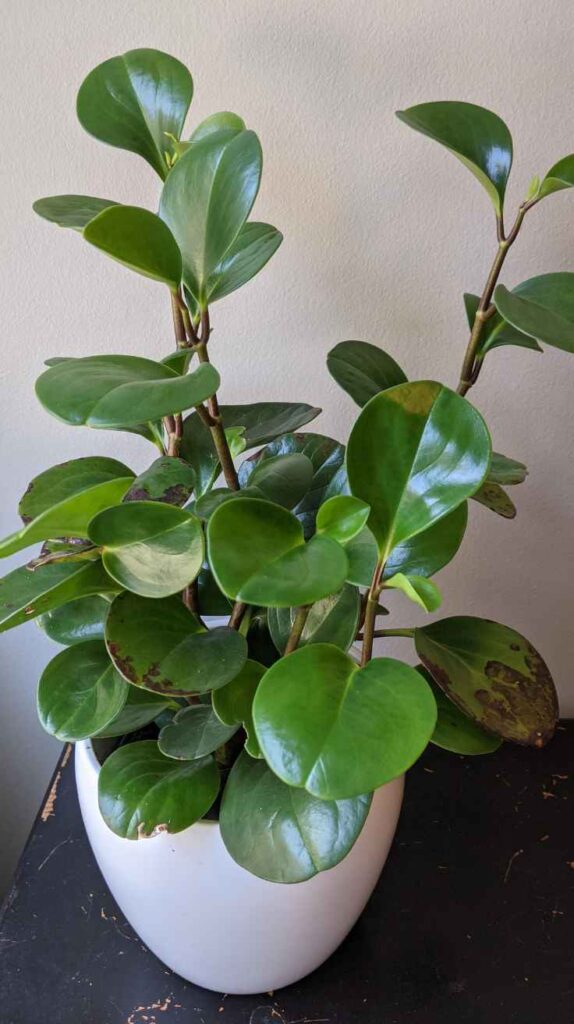
The baby rubber plant, often associated with Peperomia obtusifolia, offers thick, glossy leaves and a compact growth habit. It is a strong choice for anyone who wants a polished-looking plant that does not require a huge amount of space.
Its rounded leaves create a clean, modern appearance, while some varieties feature attractive variegation. The glossy foliage can catch natural light beautifully, making the plant stand out against a darker bookcase.
Bright, indirect light is generally beneficial, but the plant can tolerate moderate indoor conditions. Allow the soil to dry somewhat between waterings, and make sure the container drains well.
This plant works especially well with contemporary decor because its foliage looks neat and structured. A simple planter can make it feel sophisticated, while a colorful container can give the shelf a more playful personality.
When arranged beside books with similar neutral or earthy tones, the baby rubber plant can help create a cohesive display. It provides enough visual weight to balance a small stack of books without dominating the entire arrangement.
How to Choose the Right Plant for a Bookshelf
Choosing greenery for shelving should begin with the conditions rather than appearance alone. A beautiful plant will struggle if it receives unsuitable light or too much water.
Start by looking at the amount of natural light available. A shelf near a bright window can support light-loving varieties, while a darker corner may be better suited to tolerant houseplants. Remember that low light does not mean no light. Every living plant needs enough light to remain healthy.
Next, consider the plant’s mature size. A tiny pot might look perfect today, but rapid growth can quickly turn a neat shelf into a crowded jungle. Compact varieties are usually easier to manage.
Container size matters, too. Heavy ceramic pots may look attractive but can become difficult to move. Smaller lightweight planters make watering, cleaning, and rearranging much easier.
Finally, think about maintenance. Busy households may benefit from drought-tolerant choices, while enthusiastic plant lovers might enjoy varieties that need more regular attention.
How to Style Greenery Between Books
Good bookshelf styling does not require dozens of decorative pieces. In fact, too many objects can make the shelves feel chaotic.
A simple approach is to create small visual groupings. Place a plant beside a vertical row of books, then add a small decorative object nearby. Another arrangement could feature a stack of books underneath a planter, creating different heights.
Trailing varieties work beautifully at the ends of shelves. Upright plants can fill empty vertical spaces, while tiny succulents can occupy narrow gaps.
Varying heights is one of the easiest ways to make a bookshelf look intentional. Combine tall books, short books, a small planter, and a decorative object instead of placing everything at exactly the same level.
Leave some empty space, too. Negative space allows each element to breathe and keeps the shelf from feeling overcrowded.
Best Lighting Conditions for Indoor Shelf Plants
Lighting is one of the most important factors in successful indoor gardening. A plant may look perfect in a store, yet struggle when moved into a dim room.
Bright indirect light is often ideal for many indoor plants. This means the space receives plenty of natural daylight without exposing foliage to intense direct sunlight for long periods.
South-facing windows can provide strong light, while east- and west-facing windows often offer moderate conditions. North-facing windows generally provide less intense natural light.
If a shelf sits far from a window, choose plants known for tolerating lower light conditions. However, growth may still slow down in darker locations.
Watch the foliage for clues. Weak, stretched growth can indicate insufficient light, while scorched or faded leaves can signal excessive direct sunlight.
Common Mistakes to Avoid
One common mistake is watering on a fixed schedule without checking the soil. Plants do not necessarily need water simply because it is a certain day of the week. Indoor temperature, humidity, container size, and light all influence watering needs.
Another mistake is choosing a plant that grows too large. A bookshelf needs enough room for books, so selecting compact varieties can save plenty of trouble later.
Do not place wet pots directly against valuable books. Water can leak from drainage holes or spill during maintenance. Use a saucer or waterproof tray beneath containers.
Dust also deserves attention. Houseplants displayed on shelves can collect dust just like books and decorative objects. Gently wiping broad leaves can improve their appearance and help keep the foliage clean.
Finally, avoid squeezing too many plants into one area. A few carefully selected specimens usually create a more attractive result than a crowded display.
Creating a Cozy Reading Corner
Plants can do more than decorate shelves. They can help establish the atmosphere of a reading area.
Pair green foliage with warm lighting, soft cushions, natural wood, and comfortable seating. A small reading lamp can provide a practical glow, while plants add texture around the books.
Trailing vines can frame a reading nook, while compact upright plants can sit neatly on nearby shelves. Add a woven basket for blankets, a small side table for a cup of tea, and a comfortable chair to complete the space.
The best part is that the arrangement does not need to look perfect. A slightly relaxed display often feels more inviting than a perfectly symmetrical one.